Yajna Fakir
Healing In Motion: Exploring architecture’s role in shaping spaces that nurture physical, emotional and cognitive wellbeing for individuals with Multiple Sclerosis through a rehabilitation centre in Benoni
Healthcare
Benoni, Gauteng, ZA
This research investigates how architecture can serve as a tool to support the diverse needs of individuals with Multiple Sclerosis (MS) in terms of their physical, emotional and cognitive wellbeing.
Multiple Sclerosis (MS) is a neurodegenerative condition that disrupts the brain’s ability to regulate the body by attacking the myelin protective sheath surrounding nerve fibres (HopkinsMedicine, 2020). The damage to myelin results in the brain’s inability to send signals to the rest of the body, resulting in symptoms that vary for each individual (HopkinsMedicine, 2024). MS has no known cure and it does not significantly shorten a person’s lifespan. Instead, it gradually affects mobility, cognition and daily function, making even simple tasks increasingly difficult over time. The research proposes a rehabilitation centre that addresses the challenges MS individuals face by providing spaces that goes beyond conventional medical treatment.
Conventional medical treatment refers to the diagnosis, prevention, treatment or management of symptoms or conditions by healthcare professionals using clinical research and evidence (Cronkleton, 2022). Alternative therapies refers to treatments that are used alongside conventional medical treatment. These treatments often fall outside of the traditional medical scope and involve a more holistic and non-invasive way of supporting health and wellbeing(Cronkleton, 2022).With the above in mind, this research project acknowledges the important role conventional medical treatment plays when addressing a chronic condition like MS.
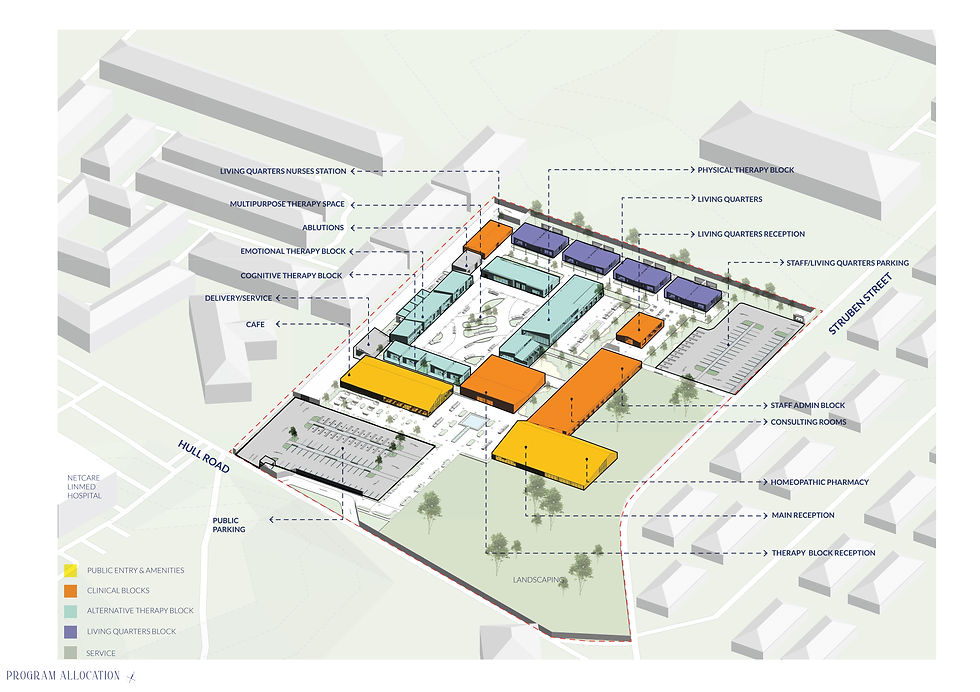
The proposed rehabilitation centre does not intend to replace this but rather complement it by focusing on alternative therapies and practices to address the condition’s multi-faceted nature, grounded in theoretical frameworks of neuroscience and neuroarchitecture, materiality and universal design that begin to provide design drivers that promote a human-centred healthcare environment.
Although MS has no cure, architecture can help ease its weight through thoughtfully designed spaces that can restore dignity, facilitate movement and nurture wellbeing. While the condition remains, design can offer something just as lasting - comfort, independence and an improved quality of life.